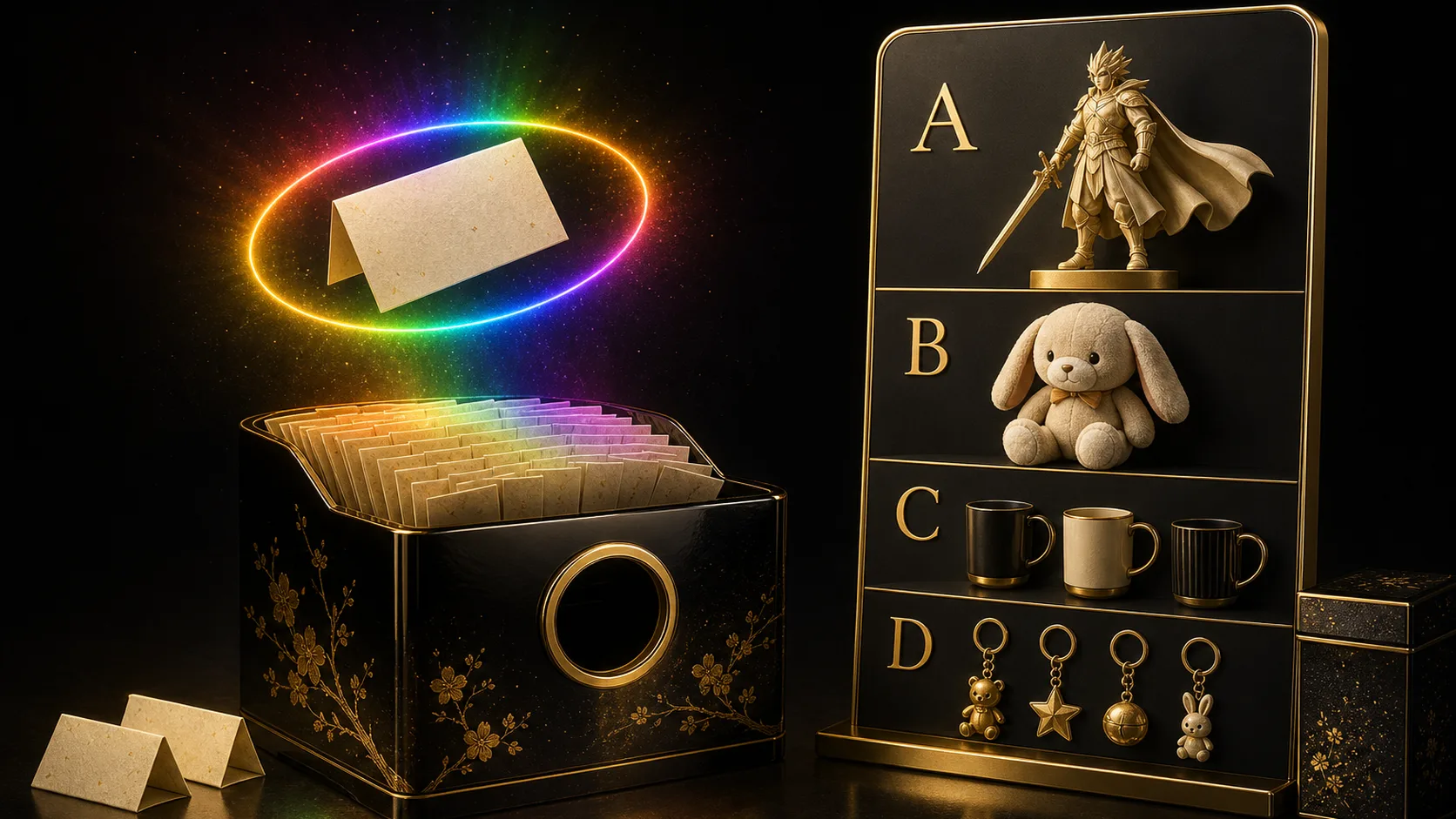
On a release morning in Japan, you can watch people line up outside a 7-Eleven before work. Not for a phone launch or a limited sneaker: for a cardboard display by the register holding a stack of sealed paper tickets. Each ticket costs somewhere between ¥700 and ¥1,000, every single one wins a physical prize, and for a popular anime series the whole stack can be gone by evening. This is kuji, Japan's prize-lottery format, and its most famous version is Bandai's Ichiban Kuji.
If gachapon is the crank-machine ancestor of blind boxes, kuji is the ancestor of the limited drop: a fixed number of tickets, a posted prize board, and a run that ends. It has quietly become one of the most effective retail formats in Japan, and it is starting to travel.
What ichiban kuji actually is
Ichiban kuji roughly translates to "the best lottery," and the name is a specific brand: Banpresto, now part of Bandai Namco, launched Ichiban Kuji as a convenience-store product in 2003. Today it is run by Bandai Spirits, which by its own count has issued over 830 million tickets cumulatively as of March 2025 and releases roughly 250 kuji products a year across more than 100 licensed franchises. One Piece, Pokémon, Dragon Ball, Demon Slayer, Sanrio: if it has fans, it gets a kuji.
The format itself is simple enough to explain at the register:
- Every ticket wins. There are no losing tickets. You pay, draw a sealed slip, and it names a prize tier: A prize, B prize, on down. Top tiers are large figures or plush; lower tiers are towels, glassware, acrylic stands, or clear files. The floor is a real product, not a coupon.
- The run is fixed. A kuji set ships as a sealed lot, often 60 to 80 tickets per display. The store posts the full lineup and how many of each prize remain. When the tickets are gone, the run is over. There is no restock of the good stuff.
- The prizes are exclusive. Kuji items are manufactured for that run and sold no other way. You cannot buy the A prize off a shelf; you can only draw for it, or pay a scalper later.
- The last ticket wins twice. Bandai's version calls it the "Last One" prize: whoever buys the final ticket in the display gets a special bonus item, usually a variant of the top prize, in addition to whatever their ticket says. Some campaigns add a second-chance online draw on top.
That last rule is the clever one, and it is worth pausing on, because it solves a problem every store that sells anything randomized eventually hits.
The endgame problem, and how kuji fixed it
In a naive blind-box run, the last units are the worst product you sell. Buyers can see the top prizes are claimed, the remaining pool is mostly low tiers, and demand dies exactly when you need it to finish the run. Merchants know this pattern well: the first 70% flies, the last 30% sits.
The last-ticket bonus inverts that. Because the final ticket carries a guaranteed extra grand prize, the board gets more interesting as it empties. Regulars in Japan track boards across stores, ask the clerk how many tickets remain, and buy out the tail of a run on purpose, low-tier slips and all, because clearing the stack is the only way to claim the bonus. The hardest inventory to move becomes the most contested. It is one of the smartest pieces of retail design of the last twenty years, and it is a big part of why kuji displays sell out instead of trailing off.
How stores in Japan run it, and why it's growing
Kuji lives where foot traffic lives: 7-Eleven, Lawson, and FamilyMart, plus bookstores, hobby shops, game centers, and a network of dedicated official kuji stores. The display does the merchandising by itself. A poster shows the full prize lineup, a tally sheet shows what is left, and the drama of a half-empty board pulls in people who did not walk in for it.
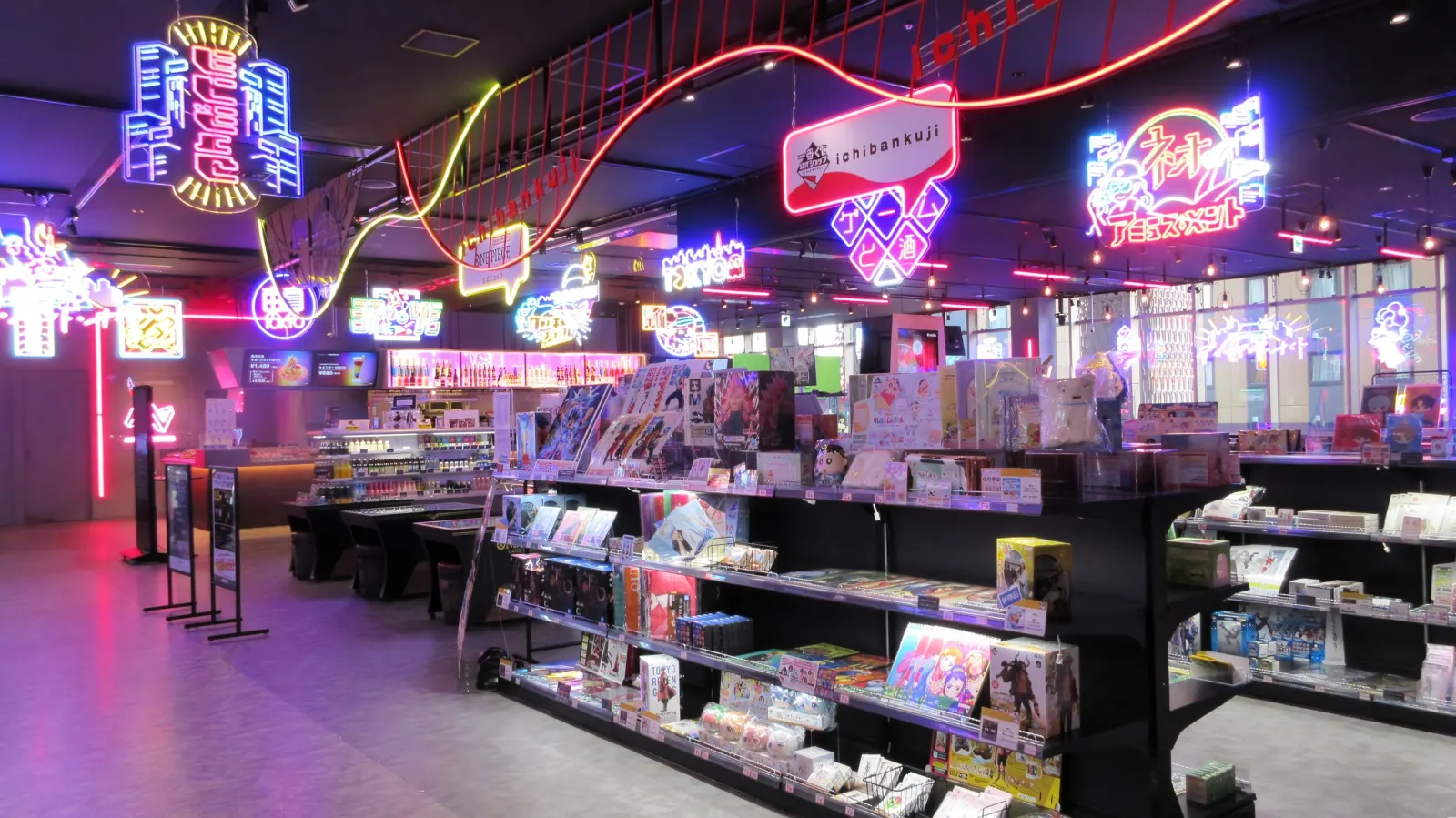
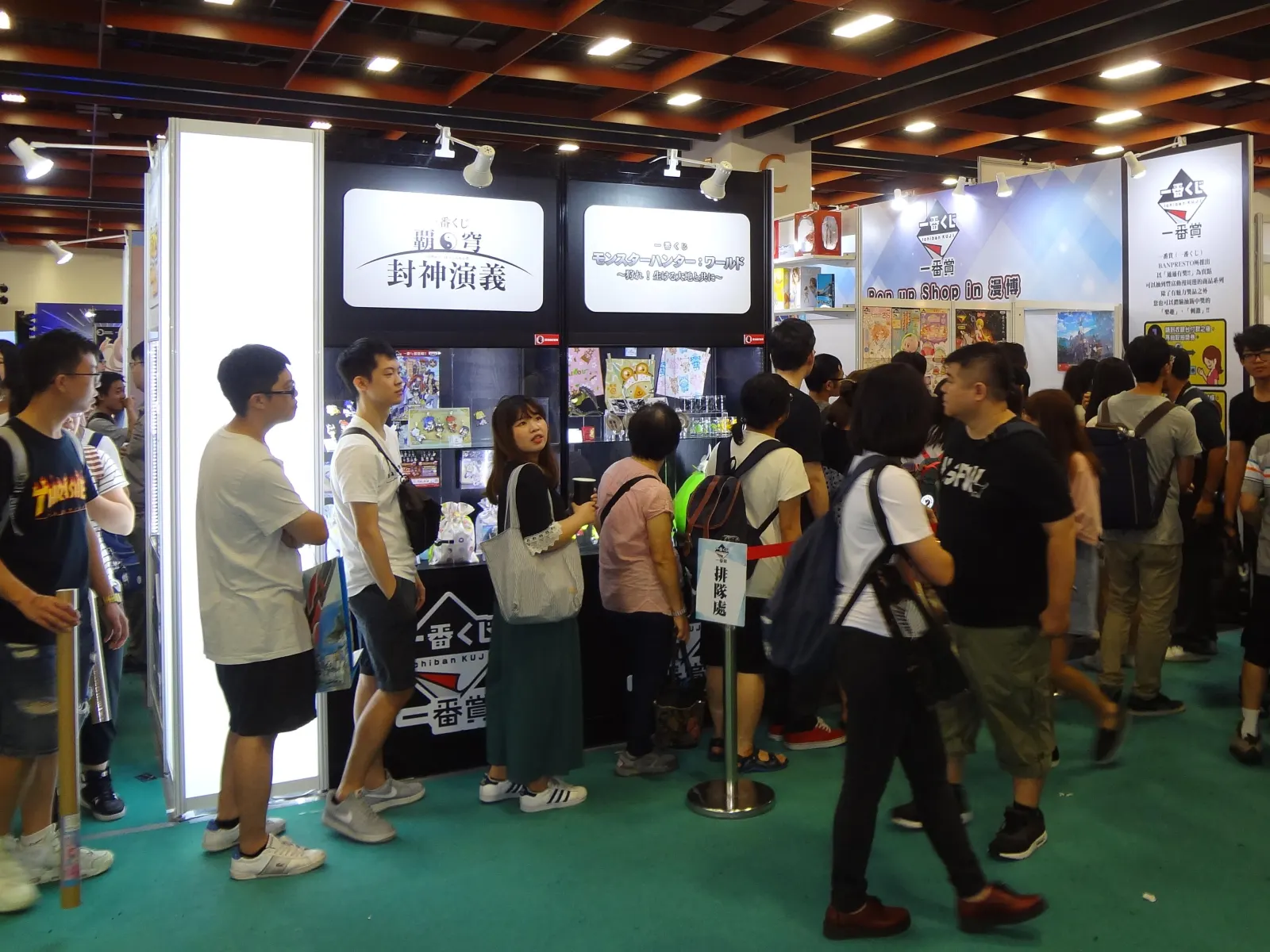
Two things have pushed the format from steady to surging. The first is the same global appetite for character goods that made Labubu a phenomenon and turned gacha commerce into a real category. Popular kuji runs now sell out on day one, resale prices for top prizes climb the same hour, and overseas fans buy tickets through proxy services because most runs never leave Japan. Bandai Spirits has started localizing kuji for Taiwan, China, and other markets rather than treating it as a domestic quirk.
The second is that kuji went online. Bandai runs an official Ichiban Kuji web store where you draw digitally and the prizes ship to you, with the remaining-prize count displayed live, just like the paper tally in a store. Around it has grown a whole industry of white-label platforms, and thousands of online kuji campaigns have been run on them, by publishers, idol agencies, and individual creators. In Japan, the prize-lottery drop is no longer a Bandai product. It is infrastructure, the way "flash sale" or "preorder" is infrastructure.
Everywhere except, until recently, Western ecommerce. Which is odd, because the format is a near-perfect fit for the stores already selling mystery boxes on Shopify: card shops, collectible brands, and anyone with a community that treats a drop as an event.
Running a kuji-style drop on Shopify
This is the part we build. Chancey now supports limited runs with what we call a Final Pull Bonus: the kuji endgame, rebuilt for an online storefront.
- A fixed edition size. You set the run at, say, 80 boxes, and that number locks when the run launches. Raising inventory later does not stretch the run; when the last box sells, it is over, exactly like a sealed ticket display.
- Ticket numbers at payment. Every box gets a durable ticket number the moment its payment completes: box 1 through box 80, in order. Not the fastest reveal, and not a drawing held after the fact. Whoever's payment lands on the final number holds the final box.
- A bonus on top, not instead. The final box wins the bonus prize in addition to the regular prize it reveals from the pool. The bonus never touches the regular odds; it is a separate, guaranteed award.
- Milestones for bigger runs. Pooling three sets into one 240-box run? You can place a bonus at box 80, 160, and 240, so buyers hit a guaranteed prize at the end of every stretch instead of only at the very end.
- Your storefront, your term. Shops sell this mechanic under their own names, so the bonus row on the prize board can carry whatever your community calls it.
You can also choose what buyers see: show the bonus prize openly, keep it a mystery that only the winner ever learns, or keep it hidden while the run is live and announce it once the last box sells. What never changes is disclosure. The storefront always states that bonuses exist, that each is additive, and exactly which box numbers win them.
The provably fair part
In a physical store, kuji polices itself. The board is on the counter, the tally sheet is public, and you can watch the stack shrink. Online, all of that disappears behind a server, and "trust me" is not a prize board. This is where we think Shopify merchants can actually run the format better than paper tickets, and as far as we know Chancey is the first to bring it to Shopify this way.
The regular draw in every Chancey box uses commit-and-reveal cryptography: the outcome is sealed before you buy, and buyers can verify after the reveal that nothing changed in between. The Final Pull Bonus needs no randomness at all, so it gets something even stronger than a proof: a public ledger. The winning box numbers are published before the run starts, the ticket counter on the odds board shows how many boxes have sold, and the winner is simply whoever holds the stated number. There is no draw to rig, and nothing to take on faith. A paper kuji board is honest because you can see it; this is honest because you can check it.
Twenty-plus years of sold-out displays in Japan say the format works. If your store has the audience for a real drop, a limited run with a bonus on the final box is the difference between a launch that trails off and one that gets bought to zero. Try Chancey and set one up, or read how these formats stay on the right side of the gambling line first.